
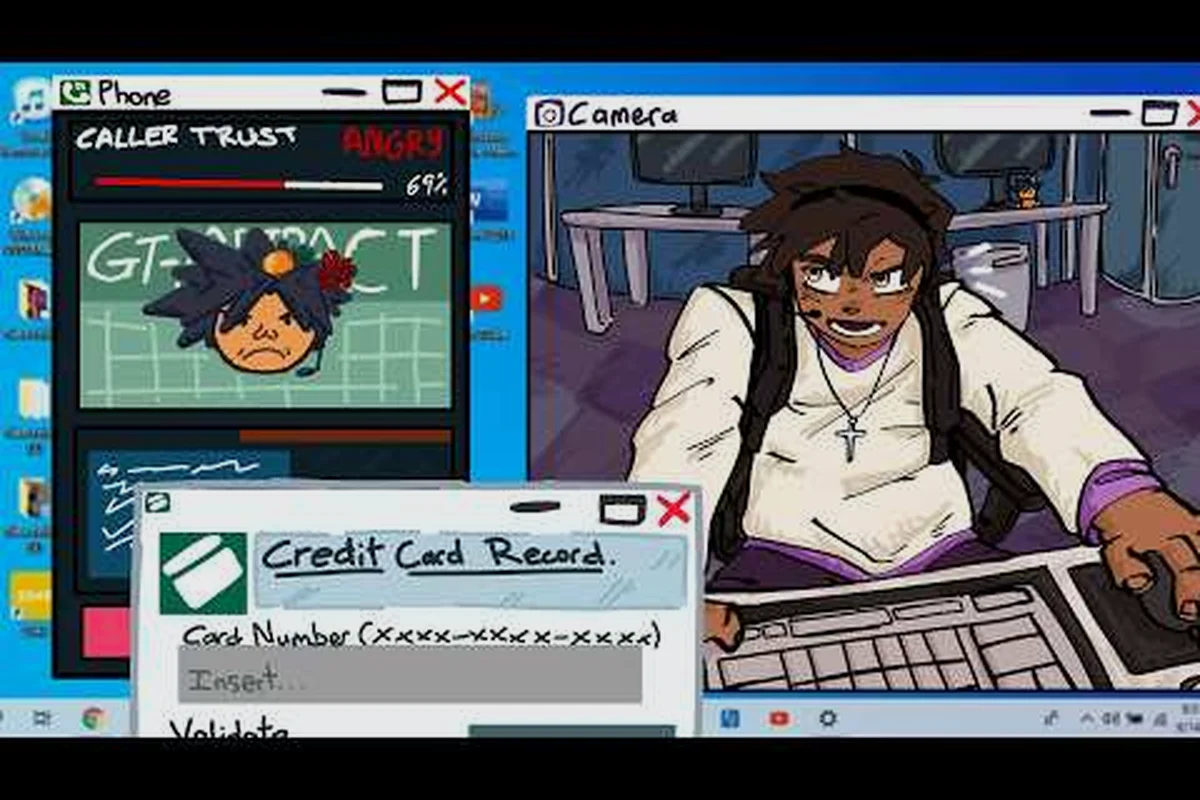
A quota fail mid-shift doesn't end your run — it just changes what you do next. Learning to survive a bad day in Scam With Your Friends means triaging the damage, protecting your job, and salvaging whatever payout is still on the table before the boss walks the floor.
Why a Bad Day Snowballs in Scam With Your Friends
A single missed quota rarely stays a single problem. The moment your daily target slips, three things start working against you at once: the boss's attention climbs, callers grow suspicious because you're rushing, and office chaos events come faster as the shift drags. Players who panic and start dialing every number they can find usually make the hole deeper, not shallower.
The core issue is that the game rewards consistency over heroics. One huge payout can't erase a string of failed calls, because your standing is judged across recent shifts rather than your best single night. In practice, most failed runs trace back to the same pattern — a slow first hour, then a desperate scramble that draws attention and ends in a raid or a firing.
Understanding this snowball effect is the first step toward surviving it, because the pressure doesn't just build — it compounds. Each failed call makes the next one harder, and once the boss is watching closely, office chaos events like the surprise audit or the rival crew shakedown start firing back-to-back instead of once in a while. If you recognize the early warning signs — two missed quotas in a row, a caller who hangs up mid-pitch, or the boss starting to hover — you can shift into damage-control mode before the situation becomes unrecoverable. The players who survive bad days aren't the ones who hit the biggest single payout; they're the ones who spot the spiral early and pivot to low-risk calls instead of chasing a miracle.
The Three Failure States
Not every bad day is the same, and the fix depends on which failure state you're in. A soft fail — say you're slightly under quota with time left in the shift — is a completely different problem from a hard fail where the boss has already flagged your desk, and both demand different risk management. Misreading your state is how a recoverable day snowballs into a terminal one, so before you call a friend to help scam your way out, diagnose which of the three states you're actually in.
-
Soft fail: You're behind quota but nobody's watching yet. Fixable with one strong call.
-
Hard fail: The boss has flagged your desk. You need to lower the temperature immediately.
-
Terminal fail: A raid is under way or your review is already failing. Survival mode only.
Signals That a Day Is About to Turn
Before things go terminal, the game telegraphs trouble. Watch for callers who normally convert starting to hesitate, a sudden drop in call volume, and the boss hovering near your station. These are your cues to stop chasing big scores and start protecting what you have.
A useful cross-reference here is the efficiency guide, which breaks down how office and desk upgrades can quietly rescue a shift that's already sliding. The key is timing: a desk upgrade that raises your call volume ceiling matters little once callers start getting suspicious, but a small comfort upgrade that keeps you settled can buy back the seconds you need to close a safe, low-value scam instead of forcing a high-risk pitch. Treat upgrades as a mid-shift bailout, not a pre-shift investment — spending cash on furniture while your quota is already failing just deepens the hole.
Scam With Your Friends Quota Fail: Triage Steps That Save the Shift
When you realize you're going to miss quota, the worst move is to keep grinding the same strategy that got you there. Triage means accepting the miss and redirecting effort toward the things you can still influence — attention, suspicion, and the boss's patience.
The table below ranks the triage actions by how much they protect your run, ordered from highest to lowest impact on your remaining shifts. Prioritize from the top down — cutting attention-grabbing scams first keeps the boss off your back, while switching to low-suspicion scripts keeps callers engaged long enough to bank partial payouts. Lower-priority steps like clearing desk clutter or dodging the boss's path matter less for survival but still reduce chaos events and delay the review that can trigger an instant firing check.
| Priority | Action | Why It Helps | Risk If Skipped |
|---|---|---|---|
| 1 | Stop attention-grabbing scams | Keeps the boss off your back | A raid or review triggers early |
| 2 | Switch to low-suspicion scripts | Keeps callers on the line | Callers hang up, zero payout |
| 3 | Clear desk clutter | Reduces chaos event spawns | Distractions split focus |
| 4 | Bank partial payouts | Locks in whatever you earned | Wasted calls on failed marks |
| 5 | Avoid the boss's path | Delays the review | An instant firing check |
Step-by-Step Damage Control
When the shift turns ugly — a quota fail, a blown cover, or attention spiking after a botched pitch — do not improvise. Recovery in Scam With Your Friends is a triage sequence: stabilize suspicion first, then rebuild quota with low-risk marks. Panic-scamming a high-value target while the boss is already watching is how most runs end in a firing screen rather than a payout.
-
Pause and breathe. Rushing raises suspicion. Take one clean call at a time.
-
Drop your riskiest scam. If an approach reliably draws attention, shelve it until tomorrow.
-
Lean on reliable scripts. The scam strategy breakdown shows which tactics keep suspicion low enough to survive a rough night.
-
Bank small wins. A string of modest payouts beats one failed jackpot attempt.
-
Stay off the boss's radar. Don't walk past his office or trigger a review prompt.
Panic Moves That Make a Quota Fail Worse
Panic behavior is predictable and the game punishes it. When a quota fail hits, the instinct is to sprint at the nearest terminal and mash the interact key — but frantic movement is exactly the kind of thing that draws attention and makes a raid more likely. A cleaner response is to freeze, check your remaining shift timer, and settle yourself before you touch anything. Avoid these traps:
-
Don't spam-dial random numbers hoping for a miracle mark.
-
Don't switch to aggressive scams to "catch up" — that's how raids start.
-
Don't ignore an active raid thinking it'll fade on its own.
-
Don't spend your remaining time on upgrades mid-shift; you can't install them fast enough.
Recovering From Failure: The Comeback Mindset
Recovering from failure in Scam With Your Friends is less about one heroic night and more about stringing together two or three stable shifts. The boss forgives a single bad day if the shifts around it look solid, so your job after a quota fail is to make the next shift boringly consistent.
Think in terms of a rolling window. If your standing is judged across several shifts, one disaster drags it down, but two clean shifts pull it back up. That means the fastest recovery is not a risky gamble — it's a return to fundamentals: reliable scripts, steady call volume, and nothing that draws attention.
In practice, players who bounce back fastest are the ones who treat a bad day as data. They note which scam failed, which caller type resisted, and which distraction cost them time, then adjust the next shift accordingly. A concrete example: if your quota fail traces back to pushing the refund scam against a skeptical caller type when the tech-support script would have landed, that single note reshapes tomorrow's script rotation. Logging what went wrong alongside each failed pitch turns a vague "rough night" into a prioritized fix list — one wasted distraction becomes one avoided mistake on the next shift.
Building a Two-Shift Recovery Plan
A simple recovery plan keeps you from overcorrecting after a quota fail. When your squad's scam with your friends quota collapses on a bad day, the instinct is to chase high-risk marks immediately to claw back the deficit — that's exactly how crews get flagged and fired. Instead, stagger your comeback: run low-risk scams at steady volume on the next shift to stabilize, then reintroduce moderate risk and bank payouts, and only resume your normal strategy on the third shift. This mirrors how risk management works in any chaos survival run: absorb the loss, rebuild your safety margin, then scale back up.
| Shift | Goal | Focus |
|---|---|---|
| Next shift | Stabilize | Low-risk scams, steady volume |
| Shift after | Rebuild | Moderate risk, bank payouts |
| Third shift | Recover | Resume normal strategy |
Tracking What Actually Went Wrong
Keep a mental log of the failure. Was it a caller who stopped responding, a chaos event, or simply slow dialing? Each cause has a different fix, and misdiagnosing it means repeating the mistake. If your failures cluster around one scam type, that's your signal to rotate your roster.
Scam With Your Friends How to Not Get Fired: Job Protection Tactics
Staying employed is a separate skill from making money. A firing check can follow a combination of missed quotas and everything else that has drawn attention, so you can survive a bad day purely by keeping the boss's eye elsewhere. This is where risk management becomes your real job.
The key insight is that the boss reacts to visible problems, not hidden ones. A messy desk, a loud failed call, or a caller who reports you all draw his eye. Quiet, controlled shifts — even low-earning ones — keep you off the chopping block.
Priorities Under a Job-Protection Plan
| How much attention | Boss Behavior | Your Response |
|---|---|---|
| Low | Ignores your desk | Continue normal calls |
| Medium | Glances over | Slow down, drop risky scams |
| High | Walks toward you | Stop, look busy, avoid prompts |
| Critical | Review triggered | Pure survival, no new calls |
The Quiet Shift Strategy
When your job is on the line, a quiet shift beats a profitable one. Dial fewer numbers, pick callers who convert easily, and avoid anything that generates noise or attention. You won't hit quota, but you'll survive to fight another day — and surviving is the whole point of a bad-day run.
If you're also trying to climb the ladder rather than just hold your seat, the promotion guide explains how the review actually works, which helps you judge how much risk you can afford.
Scam With Your Friends Chaos Survival: Handling Office Disasters
Office chaos is the wildcard that turns a manageable bad day into a disaster. Distractions, props knocked over, and unexpected events all eat into your limited call time, and they stack — two chaos events in one shift can wipe out any chance of recovery.
Chaos survival comes down to prevention and triage. Preventing events means keeping your station clean and avoiding actions that spawn them. Triaging means deciding which events to handle and which to ignore, because chasing every distraction is a losing game.
Ranking Chaos Events by Threat
| Event | How bad | Best Response |
|---|---|---|
| Desk clutter buildup | Low | Clear between calls |
| Loud failed call | Medium | Switch to quiet scripts |
| Prop knocked over | Medium | Fix only if boss nearby |
| A raid starting | Critical | Drop everything, hide evidence |
When to Ignore a Distraction
Not every event deserves your attention. If a distraction doesn't draw attention or the boss, let it sit. Your time is the scarcest resource on a bad day, and spending it on a harmless mess is how shifts slip away. Save your attention for events that threaten your job or your payout.
The quota troubleshooting guide digs into why specific scam types underperform, which helps you avoid the calls most likely to spawn chaos in the first place. That matters because the distraction itself is rarely the real threat — it's the quota fail that follows when a low-yield scam eats your shift and the boss loses patience before you've banked a single payout. Treat the guide as a pre-filter: if a scam's historical yield sits near the bottom of the table, skipping it isn't laziness, it's risk management. You keep the temperature low, your payout intact, and your name off the firing list.
Risk Management on a Losing Streak
Risk management is what separates players who survive bad days from players who get fired. On a losing streak, your instinct is to take bigger risks to catch up — but that's exactly backwards. The correct move is to shrink your risk exposure until the streak breaks.
Think of your shift as a budget. Every high-risk scam spends attention and suspicion; every low-risk call spends only time. When you're behind, you have less room to spend, so you must lean harder on the cheap, reliable plays. This is counterintuitive but it's how the math works out.
Matching Risk to Your Situation
-
Ahead of quota: You can afford one aggressive play.
-
On pace: Stick to your proven rotation, no experiments.
-
Behind quota: Cut all attention-grabbing scams, maximize reliable volume.
-
Failing: Zero risk. Survive the shift, reset tomorrow.
The Two Decisions That Matter Most
Most bad-day outcomes come down to two decisions: whether you dropped your risky plays early enough, and whether you kept your station clean. Get those two right and most bad days stay survivable, even when the quota is already lost.
Frequently Asked Questions
What happens if I miss quota in Scam With Your Friends?
Missing quota draws the boss's attention and can trigger a firing check if it happens alongside everything else going wrong. A single miss is usually survivable if the shifts around it look consistent, so the priority is stabilizing the next two shifts rather than gambling on one huge payout.
Can I recover from a failed shift without getting fired?
Yes — because your standing is judged across recent shifts rather than your single worst one, two clean, low-risk shifts can pull you back even after a quota fail. Concretely: drop any aggressive scam the moment you fall behind, keep your station tidy so no chaos events spawn, and run low-suspicion scripts until your numbers stabilize. Patience wins here — each quiet shift lowers both the attention on you and your average risk, so a firing check passes faster than if you gambled on one high-payout mark to catch up.
How do I bring attention back down after a bad call?
Stop dialing immediately, switch to low-suspicion scripts, and clear any desk clutter that spawns chaos events. Attention fades when you avoid visible problems, so a quiet stretch of easy calls is the fastest way to bring it back down before a review triggers.
Is it worth chasing a big payout to catch up?
Almost never. Big payouts come with high attention and suspicion, which is exactly what turns a soft fail into a terminal one. Banking several modest payouts is safer and more reliable than betting the shift on one risky mark that may resist or report you.
What causes most bad days to turn into raids?
Raids usually follow a chain reaction: a missed quota leads to rushed, attention-grabbing calls, which raise suspicion and attention until a raid starts. Breaking that chain early — by dropping risky scams the moment you fall behind — is the single most effective way to prevent a raid.
A bad day in Scam With Your Friends is survivable as long as you stop chasing the quota you already lost and start protecting the job you still have. Drop your risky scams, keep your station clean, manage attention like a budget, and treat the next two shifts as your real recovery window. Surviving the chaos is the win — the payout can wait until tomorrow.