
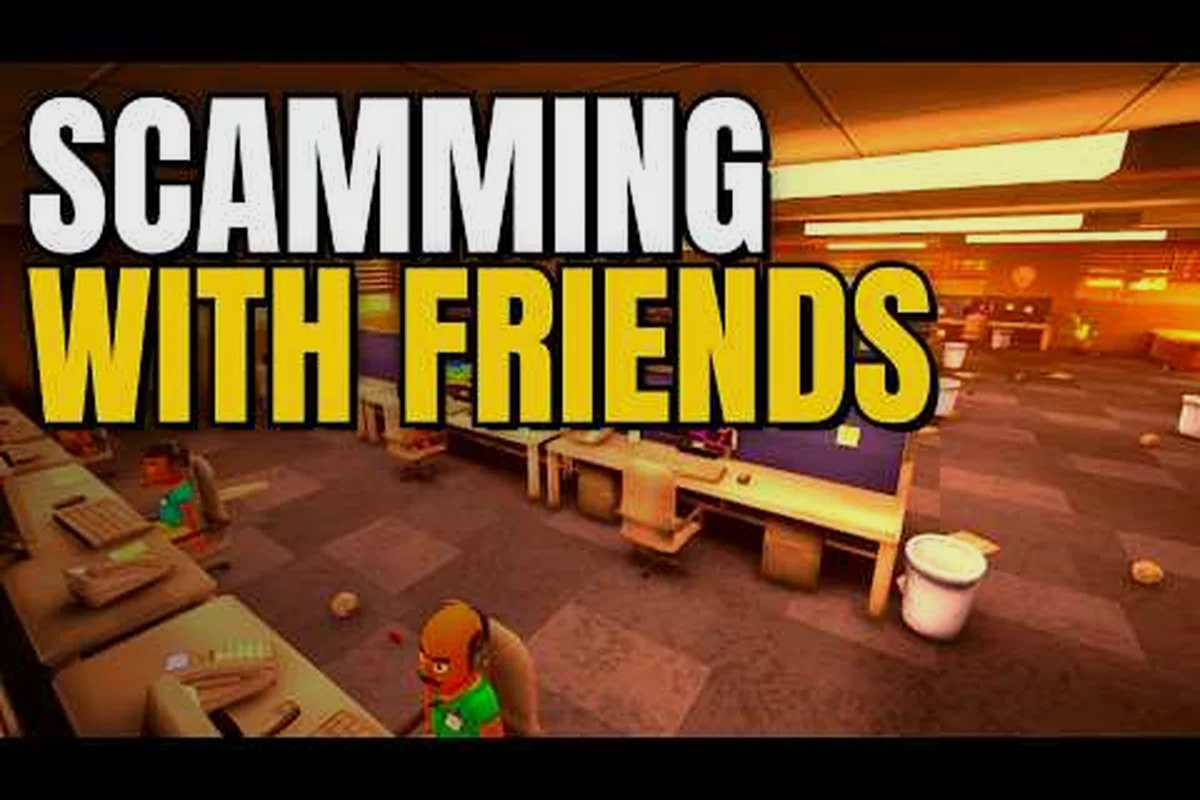
Surviving in this chaotic co-op office means mastering scam with your friends avoiding scambaiters before they flip the script on you. One wrong call to a planted undercover mark can trigger a police raid that wipes your whole shift, so knowing the warning signs early is the difference between a clean payout and a total loss.
Reading the Room: How Scambaiters Blend Into Your Call Queue
Scambaiters do not announce themselves. They pose as ordinary marks, complete with fake account numbers and rehearsed small talk, and their goal is to waste your time until security flags your desk. In practice, most scambaiters slip through because players rush the verification step and skip the details that would expose them.
The single biggest tell is a mark who stays suspiciously calm while you escalate pressure. Real marks panic, stutter, or demand a manager. A scambaiter keeps a flat tone and asks oddly specific questions about your internal process, which is a scripted attempt to gather evidence.
The Three Verification Checks That Expose a Plant
Every call gives you a short window to run verification before the mark's patience runs out. In practice, running all three checks is quick once you memorize the flow, and that speed matters because scambaiters often hang up if you stall too long.
-
Account number mismatch: the digits do not match the format your terminal expects for that region.
-
Callback refusal: a genuine mark usually agrees to a callback; a plant almost always declines.
-
Scripted pauses: a scambaiter waits a beat too long before answering personal questions, like they are reading from a prompt.
Failing two of the three checks is the hard cutoff, not a judgment call — that combination (say, an account number mismatch plus a refused callback) is the same signature community testers flag as a near-certain scambaiter plant, and the odds of a genuine mark tripping both are low enough to ignore. End the call immediately and log the mark as flagged in your shift notes so the rest of the crew can avoid re-dialing a burned number. Ending early costs you a small commission on that one call, but it protects the entire shift from a raid trigger: a plant who stays on the line long enough to trace your terminal is exactly how a scambaiting operation gets mapped and raided. Treat the two-fail rule as non-negotiable, even when the mark sounds convincing.
Comparing Scambaiter Archetypes
| Archetype | Tell | Risk Level | Best Response |
|---|---|---|---|
| The Auditor | Asks about internal tools | High | End call, flag desk |
| The Nervous Plant | Over-apologizes, never escalates | Medium | Run full verification |
| The Aggressor | Threatens to report you instantly | High | Hang up, warn teammates |
| The Ghost | Silent pauses over 5 seconds | Low | Wait, then verify |
The Auditor is the most dangerous because their questions sound legitimate, and newer players often answer them thinking it builds rapport. Answering even one internal question gives the scambaiter enough to escalate, which is exactly how a police raid gets scheduled against your office.
Understanding the Police Raid and How to Survive It
A scam with your friends police raid is not random. It is a scheduled event triggered by accumulated suspicion, and once the timer starts you have a fixed window to clean your desk and hide evidence. The police raid guide every veteran follows comes down to one rule: react the moment the alert flashes or lose the run.
When the raid alert flashes, a countdown begins. The countdown gives you a short window on standard difficulty, and it shrinks as attention on your desk grows. That attention accumulates from flagged calls, failed verifications, and leaving incriminating documents on your desk.
Step-by-Step Raid Response
-
Freeze all active calls — a live call during a raid keeps feeding attention straight to your desk.
-
Shred documents — the shredder clears evidence but takes a moment per stack.
-
Hide cash — stash loose money in the floor safe before officers reach your desk.
-
Warn teammates — a warned teammate can cover your desk while you clean.
-
Sit still — moving as the sweep closes in reads as fleeing and raises suspicion.
The order matters more than the speed. Players who shred first and hide cash second survive far more raids than those who panic and grab cash immediately, because documents draw more suspicion than loose bills. A full evidence stack left in the shredder slot draws far more attention than an equivalent wad of loose cash, so clearing paperwork before touching the floor safe keeps the raid from escalating into a full office lock-down. Squads that reverse this sequence often eat an extra officer sweep, which stalls the shift timer and hands scambaiters a free window to trace the operation. Treat the shredder as your priority queue, not the safe.
Raid Difficulty Scaling
| How much attention | Raid response | What you must do |
|---|---|---|
| Low | A short window to react | Clear your desk calmly and keep calls short |
| Medium | Pressure builds faster | Shred documents first, then hide cash |
| High | Officers close in quickly | Freeze calls and hide evidence immediately |
| Critical | The room fills with officers | Follow your escape route and hope the sweep misses you |
When attention peaks, the response escalates fast and the room fills with officers, which is nearly impossible to survive without a pre-planned escape route. Keeping attention below the middle of the scale is the real survival strategy, and that means avoiding scambaiters in the first place rather than cleaning up after them.
If your office keeps collapsing under the attention you draw, the efficiency and comeback guide breaks down how to reset a bad run and rebuild your desk setup from scratch. The key is treating a failed raid as a data point rather than a dead end: when attention peaks the raid response leaves almost no margin, so a rebuild should start by clearing any scambaiter flags that pushed your exposure that high in the first place. From there, re-establish a clean low-attention baseline before layering back profitable desk upgrades, otherwise the next air strike or workplace disaster will simply repeat the collapse.
Air Strikes and Workplace Disasters: When the Office Turns Hostile
A scam with your friends air strike is the most cinematic disaster in the game, and it arrives without the polite countdown a police raid gives you. The siren wails, the ceiling shakes, and debris starts falling on desks that are not under cover. Players who treat it like a raid and stand still get flattened.
The air strike targets the building rather than a specific player, so the correct response is to move to a designated shelter zone. In practice, desks near windows take the most damage, while interior cubicles and the break room survive most strikes intact.
Office Hazards Ranked by Lethality
| Hazard | Warning Sign | Lethality | Counter |
|---|---|---|---|
| Air Strike | Siren + shaking | Extreme | Reach shelter zone |
| Electrical Fire | Sparking outlet | High | Grab extinguisher |
| Gas Leak | Hissing pipe | High | Open windows, evacuate |
| Falling Debris | Ceiling cracks | Medium | Move to interior |
| Power Surge | Flickering lights | Low | Unplug terminals |
Workplace disasters like gas leaks and electrical fires are slower than an air strike but far more common, and they punish players who ignore the small warning signs. A hissing pipe in the break room is a fast-building fuse before the whole floor becomes hazardous.
Coordinating Disaster Response in Co-op
Solo players have to triage disasters alone, but co-op teams can split roles. One player handles the extinguisher, another clears documents, and a third keeps the phone lines alive so the shift does not stall. This division of labor is why organized teams survive workplace disasters that would end a solo run instantly.
The office and call flow guide explains how to keep call queues moving even while the floor is on fire, which is a skill that pays off every single shift. Concretely, it covers batching scam calls during the lull after a police raid warning clears, pre-loading the next mark's script while the current call is still resolving, and staggering pickups so two teammates never grab the same ringing line — a collision that stalls the whole queue and wastes the window before the next air strike window closes. On a three-player team, assigning one dedicated phone handler while the other two run extinguishers and document wipes typically keeps throughput near solo-run speed even mid-disaster, whereas an uncoordinated group loses entire shifts to dropped calls and idle hands.
Building a Survival Routine That Prevents Raids Entirely
The best police raid guide is the one you never need to use. Preventing raids comes down to managing how much attention your desk draws, and that attention is something you spend and recover every shift. Treating it as a running total rather than an abstract number changes how you approach risky calls.
Attention Priorities for Raid Prevention
-
Keep flagged calls to a minimum each shift; repeated flags push you into deeper attention.
-
Clear your desk at the end of every call, not just before a raid.
-
Rotate desks if a teammate's mistakes are spilling onto your desk.
-
Bank early so a raid cannot wipe your entire payout.
-
Avoid scambaiters by ending suspicious calls before verification finishes.
Players who follow this routine report far fewer raid events, because attention never climbs into the danger zone where a single mistake triggers a sweep. The math is simple: every flagged call adds to your exposure, and once enough flags stack the next mistake can tip you into a raid, so keeping flags low leaves you a step back from danger. That buffer matters most during verification-heavy shifts, when scambaiters deliberately bait you into piling up flags by stalling on the ID check. Banking early compounds the benefit — even if a late shift goes sideways and an air strike levels the office, your payout is already locked in, so the loss is cosmetic rather than financial. The discipline is boring, but boring shifts are the ones that pay out.
Solo vs. Co-op Survival Comparison
| Factor | Solo | Co-op |
|---|---|---|
| Raid response | Full self-clean | Split roles |
| Air strike survival | Shelter alone | Buddy system |
| Attention recovery | Slow | Shared coverage |
| Scambaiter detection | One set of eyes | Cross-checking |
Co-op teams cross-check suspicious marks, which catches scambaiters that a solo player might miss. If you are learning the ropes alone, the beginner mistakes guide covers the first-day errors that get new clerks raided before they even understand how attention builds.
Advanced Tactics for High-Attention Shifts
Once you understand the basics, the real challenge is surviving shifts where attention is already high and a raid is inevitable. In these runs, your goal shifts from prevention to damage control, and every second counts toward preserving your payout.
Pre-Raid Preparation Checklist
- Shredder loaded and within reach
- Floor safe emptied of loose cash
- Escape route memorized
- Teammate assigned as desk cover
- Active calls wrapped up
Running this checklist before attention gets serious keeps you ready for a raid that might never come, which is a cheap insurance policy. Veterans treat preparation as a habit rather than a reaction, because reacting mid-raid almost always costs more than preparing beforehand.
Telling the Air Strike Siren From the Raid Alarm
The air strike siren has a distinct two-tone pattern that differs from the raid alarm, and players who learn to tell them apart react faster. A raid wants you to stay put and clean; an air strike wants you to move. Confusing the two is one of the most common causes of a wiped shift.
Frequently Asked Questions
How do I spot a scambaiter before they trigger a raid?
Watch for marks who stay calm under pressure, refuse callbacks, or ask about your internal tools. Running the three verification checks — account format, callback, and scripted pauses — exposes most plants within seconds, letting you end the call before suspicion climbs toward a raid trigger.
What is the fastest way to survive a police raid?
Freeze all active calls before touching anything else, since a live line keeps generating trace data even while you move — an active call left running during a police raid can draw noticeably more attention to you before the officer sweep even begins. Shred documents second, because paper evidence carries the most suspicion and clearing it before grabbing cash keeps the attention low enough to pass the officer sweep. Hide cash last, then sit still and avoid sprinting, since movement noise near desks can re-trigger suspicion checks. If the raid is already closing in, skip the document step entirely and prioritize hiding cash first.
Can I survive an air strike if I am mid-call?
Yes, but you must drop the call and move immediately. The siren gives only a few seconds of warning, and desks near windows take the most damage, so sprint to an interior cubicle or the break room rather than finishing the conversation.
Do workplace disasters stack with raids?
They can. A gas leak or electrical fire adds to the pressure on your desk, and if a raid triggers while a disaster is active, your window shrinks and officers arrive faster. Clearing hazards quickly is a quiet way to protect yourself from the next raid.
Is it better to play solo or co-op for survival?
In co-op, one teammate can run the account-format and callback verification checks on a suspicious mark while another keeps the active call short, so a scambaiter plant gets flagged before suspicion climbs into raid-trigger range. Splitting roles also helps during stacked events: if a gas leak or electrical fire hits while a raid is running, a partner can clear the hazard and shred documents while you freeze calls and hide cash, keeping the combined attention under the officer-sweep threshold. Solo play is still viable, but with no one to cover your desk mid-raid you must cap your exposure earlier and rehearse the freeze-shred-hide order until reaction times stay tight.
Surviving this game is really about discipline over reflexes. Reading marks carefully, capping your exposure, and reacting to raids and air strikes with a rehearsed routine will keep your office standing shift after shift, long after reckless players have been raided into a fresh save.