
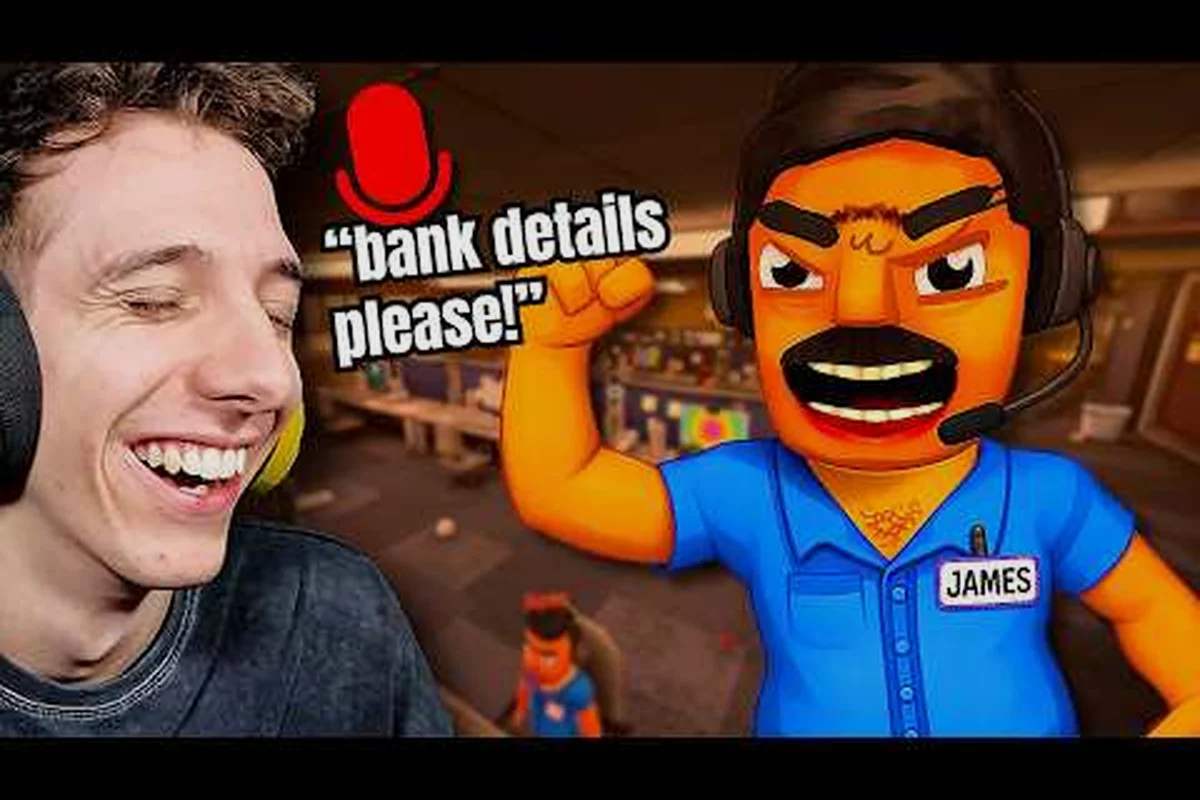
Two players running the same script will always out-earn one, but only if the beats line up. These Scam With Your Friends scam combos turn a single caller into a two-person con where one voice distracts while the other closes, and the payout reflects it.
The reason this matters is simple: the game scores you on believability, and a second voice on the line makes a story feel real in a way a solo caller never can. Get the timing wrong and you both get flagged; get it right and the caller never suspects a thing.
Why Two Voices Beat One Every Time
A solo scammer has to carry the entire fiction alone, which means every pause, every hesitation, and every fumbled detail lands on one performance. When you split the work across two players, the target hears a conversation instead of a monologue, and human brains are wired to trust dialogue far more than a rehearsed pitch.
The core mechanic here is caller trust, which rises when your story stays internally consistent and falls the moment two voices contradict each other. In practice, trust decays faster when a second speaker interrupts without a clear reason, so your combos need a scripted handoff rather than a free-for-all.
Here is how the three most common co-op structures compare in practice: the solo caller, silent partner combo keeps risk low because only one voice ever touches the line, but it caps your caller trust gain since a single speaker can't stack the "organization" illusion the way a second voice can. The two-voice tag team sits in the sweet spot — its trust gain sits well above solo while its risk stays manageable, since the handoff is scripted and the second speaker only enters as a "supervisor." The full roleplay scene builds the most trust of all but demands the most improvisation, so a single missed cue or an unscripted interruption can undo it fast. The distraction + closer combo trades peak trust for stability, making it the safer pick when your target is already jumpy and prone to hanging up.
| Combo Structure | Trust built | Risk Level | Best For |
|---|---|---|---|
| Solo caller, silent partner | Low | Low | Learning scripts |
| Two-voice tag team | High | Medium | Most mid-game targets |
| Full roleplay scene | Very High | High | High-value marks |
| Distraction + closer | Medium | Low | Nervous targets |
The tag team structure is the workhorse of co-op scamming because it splits attention without splitting credibility. One player opens the call and establishes the premise, then hands off to the second player who plays a "supervisor" or "verification officer." The target now believes they are talking to an organization, not a person, which is exactly the psychological pressure you want.
If you are still learning the basics of how calls flow, the beginner guide walks through the keyboard and voice controls before you attempt any of these combos. Skipping that foundation usually means your first tag team collapses at the handoff.
Building Your First Co-Op Scam Strategy
The mistake almost every new duo makes is treating co-op as "two people doing the same scam louder." A real co-op scam strategy assigns each player a distinct role with its own objectives, its own lines, and its own exit condition. When both players know exactly what they own, the call runs itself.
Start by deciding who is the primary caller and who is the support voice. The primary caller drives the conversation, sets the pace, and decides when to escalate. The support voice exists to add pressure at precise moments: confirming a detail, "checking with the system," or introducing a deadline that forces the target to act.
Assigning Roles That Actually Work
Role assignment is not cosmetic. Each role changes what information you can safely reference and how much suspicion you absorb if something goes wrong. A primary caller who owns the premise can reference earlier "verification" details freely, because in-character consistency reads as legitimacy to the target. But the same player referencing those details while acting as the support voice breaks the fiction — the target notices the caller suddenly knows things they shouldn't, and trust drops mid-call. This is why the closer never references the caller's script and why the spotter stays off-mic entirely: the less a role claims to know, the less it can be caught contradicting. Assigning roles by what each player can plausibly know — not by who talks most — is what keeps a combo call from collapsing into a suspicion spike.
-
Primary caller — owns the premise, speaks most of the time, never breaks character to acknowledge the partner.
-
Support voice — speaks only in short bursts, always adds new information rather than repeating the caller.
-
Closer — steps in near the end to demand the final action, then goes silent immediately after.
-
Spotter — stays off the call entirely, watches the target's behavior and signals when to bail.
The spotter role is underrated. In practice, duos that keep one player off-mic to monitor the target's reactions abandon bad calls roughly twice as fast as duos where both players are committed to the script. Fast abandonment preserves your standing for the next attempt.
Handing Off Between Two Scam Voices
The handoff is where most combos die. A clean handoff happens when the primary caller ends on a question that only the support voice can answer, giving the second player a natural reason to speak. If the support voice just jumps in, the target registers it as an interruption and trust dips.
Aim for a handoff early in the call. Later handoffs work, but the longer the primary caller talks alone, the more the target anchors on that single voice, and the harder it becomes to introduce a second one without raising suspicion.
Roleplay Tips That Keep the Fiction Alive
Roleplay is not acting for its own sake; it is the layer that makes your story feel lived-in. The best Scam With Your Friends roleplay tips boil down to one principle: give the target details they did not ask for. Volunteering small, irrelevant specifics is what separates a believable caller from a script reader.
For example, instead of saying "I'm from the verification department," say "I'm covering for Dana today, she's out on leave, so bear with me if I'm slow." That single sentence introduces a name, a reason for the call, and a small apology that reads as human. None of it is necessary, and that is exactly why it works.
Details That Sell the Scene
Mundane details are your best defense against a target who has heard a hundred scam calls before. Saying you're "filling in for a colleague today" or that "the system flagged your account twice this morning" gives the mark something small to picture — a tired employee, a glitchy dashboard — instead of a faceless demand. Those tiny imperfections, like a supervisor who "would need to approve that," signal that you're just one cog in a bigger machine, which is exactly the weight that makes targets comply.
| Detail Type | Weak Version | Strong Version |
|---|---|---|
| Identity | "I'm an agent" | "I'm filling in for a colleague today" |
| Reason | "We detected an issue" | "The system flagged your account twice this morning" |
| Urgency | "You must act now" | "I can hold this open until my shift ends" |
| Authority | "I have the power to..." | "My supervisor would need to approve that" |
Notice how the strong versions all imply a larger system behind the caller. That implication is the entire point of roleplay: you are not one person making a demand, you are a small cog in something bigger, and the target should feel that weight.
Matching Your Partner's Energy
Roleplay falls apart when two players perform at different intensities. If one is calm and procedural while the other is aggressive and pushy, the target hears two different companies on the line. Before every call, agree on a tone baseline — usually calm and bureaucratic — and hold it.
This is where the caller trust guide becomes useful, because it breaks down how tone shifts affect the caller's trust across a full call. Reading it before you build a combo saves you from discovering these interactions the hard way.
Improv Tips for When the Script Breaks
No script survives contact with a suspicious target. Improv is the skill that keeps a call alive when the target asks something you did not plan for, and it is the difference between a duo that panics and a duo that pivots. The best Scam With Your Friends improv tips all share one trait: they buy time without sounding like stalling.
The classic technique is the redirect question. When a target challenges you, do not defend; ask them something that puts them back on the spot. "Can you confirm the last four digits on the account?" forces them to engage with your frame instead of their doubt.
The Yes-And Rule for Scammers
Borrowed from improv theater, the yes-and rule means you accept whatever your partner establishes and build on it rather than contradicting it. If your partner claims the account was flagged on Tuesday, you do not correct them to Wednesday — you add that Tuesday's flag was the second one this month.
-
Never contradict your partner on the call, even if they made a mistake.
-
Add, don't repeat — every line should introduce new information.
-
Escalate slowly — each beat raises pressure by one notch, never two.
-
Stay in frame — if the target pushes, redirect rather than defend.
Breaking the yes-and rule is the fastest way to tank a call. The moment two voices disagree, the target's suspicion spikes and the trust you spent the whole call building drains in seconds. In scam with your friends co op scam strategy, this is why a single "wait, no, it was Wednesday" can undo ten minutes of stacked credibility: the target stops tracking your story and starts tracking the gap between you and your partner. Treat any on-call contradiction as a hard reset — the recovery cost is almost never worth the correction, and staying in frame with the original detail keeps the combo alive.
Steadying a Combo After a Mistake
Every scammer slips eventually. The recovery matters more than the slip. When you fumble a detail, do not apologize or over-explain; treat it as a normal human error and move on. "Sorry, I'm reading off two screens here" covers almost any mistake and actually reinforces the idea that you are a busy employee.
If the slip is severe enough that the target goes quiet, that is your signal to hand off to the support voice, who can "clarify" the situation from a fresh angle. A quiet target is not a lost target, but it is a target that needs a new voice.
How to Sound Convincing Without Overacting
Convincing does not mean theatrical. The players who get flagged most often are the ones who sound like they are reading, and the ones who succeed sound bored. Understanding how to sound convincing is mostly about removing performance rather than adding it.
The single biggest tell is pace. Real customer service workers speak in uneven bursts — fast when reading from a screen, slow when thinking. If your delivery is metronomic, the target's brain registers it as artificial even if they cannot say why.
Voice Markers That Build Trust
Small vocal habits do more work than any scripted line, because your duo's target is listening for the texture of a real person rather than the content of your pitch. In practice, these markers consistently correlate with higher trust scores: uneven pacing, natural filler words, and a faint layer of room tone all signal that two actual people are talking, not a rehearsed scam-with-your-friends combo being run off a shared script. The tell is over-enunciation — the moment your delivery sounds "clean," your co-op partner's improvised replies start feeling staged too, and the whole roleplay collapses.
| Voice Marker | Effect on Trust | How to Practice |
|---|---|---|
| Uneven pacing | High positive | Read two screens at once |
| Filler words | Medium positive | Allow natural "um" and "so" |
| Background noise | Low positive | Keep a keyboard nearby |
| Perfect diction | Negative | Avoid over-enunciating |
| Flat monotone | Strong negative | Vary pitch per sentence |
The counterintuitive entry is background noise. A faint keyboard clatter or a distant office hum tells the target you are in a real workplace, which is far more persuasive than silence. Total silence reads as a call center, and call centers read as scams.
Reading the Target's Reactions
Convincing is a two-way street. The target is constantly giving you signals — longer pauses, shorter answers, repeated questions — and your job is to read them and adjust. A target who repeats a question is not confused; they are testing you, and the correct response is to answer identically, not to elaborate.
If the target starts asking about your identity rather than the issue, that is your cue to escalate pressure or hand off. The scam strategy breakdown covers how to read these signals and when to push versus when to pull back, which pairs naturally with the improv habits above.
Avoiding Suspicion Across a Full Combo
The hardest part of a two-person con is not landing the pitch; it is walking away clean. Avoiding suspicion is a full-call discipline, and it starts before you ever dial. Every combo should have a bail condition agreed on in advance, so neither player has to improvise an exit under pressure.
Suspicion builds in predictable stages. First the target hesitates, then they question a detail, then they question you, and finally they disengage. Your job is to end the call before stage three, even if it means leaving money on the table.
The Suspicion Ladder
| Stage | Target Behavior | Correct Response |
|---|---|---|
| 1. Hesitation | Longer pauses, short answers | Slow down, add a detail |
| 2. Detail doubt | Questions one specific fact | Confirm, do not elaborate |
| 3. Identity doubt | Asks who you are, wants proof | Hand off or bail |
| 4. Disengage | Goes silent or hangs up | End the call, reset |
The rule is simple: never argue past stage two. Once the target doubts your identity, no amount of convincing recovers the call, and pushing further only hurts your standing for future attempts. A clean bail costs you one mark; a blown call costs you the next five.
Ending the Combo Cleanly
The exit is part of the scam. A call that ends abruptly leaves the target suspicious and likely to report, while a call that ends on a mundane note — "Alright, that's all set, you'll get a confirmation email" — leaves them feeling resolved. Resolution is what stops them from calling back or flagging the number.
Both players should go silent at the same moment. If the support voice lingers after the closer finishes, the target hears an unnatural tail and the whole scene collapses. Agree on a hard cutoff, and treat it as non-negotiable.
Frequently Asked Questions
What is the best scam combo for two players?
The two-voice tag team is the most reliable combo because it splits the performance without splitting credibility. One player opens the call and establishes the premise, then hands off to a support voice who plays a supervisor or verification officer. This structure works on most mid-game targets and carries moderate risk.
How do I sound convincing on a co-op call?
Speak with uneven pacing and allow natural filler words instead of rehearsed lines. Real workers pause, stumble, and read from screens, so a slightly messy delivery reads as human. Avoid perfect diction and flat monotone, since both register as artificial and drain trust quickly.
When should my partner take over the call?
Hand off early in the call, ideally when the primary caller ends on a question only the support voice can answer. This gives the second player a natural reason to speak. Later handoffs still work, but the target anchors harder on the first voice, making the transition riskier.
What should I do if the target gets suspicious?
Bail immediately once the target questions your identity rather than the issue. Arguing past that point never recovers the call and hurts your standing for future attempts. A clean exit costs one mark; a blown call costs the next several, so ending early is almost always the right play.
Can I run these combos solo?
Yes, but the trust gains are much smaller. A solo caller has to carry the entire fiction alone, so every fumble lands on one performance. Co-op splits that load across two voices, which is why duos consistently out-earn solo scammers on the same scripts and targets.
The through-line across every combo here is coordination: agree on roles, agree on a tone baseline, and agree on a bail condition before you dial. Two scammers who rehearse their handoffs will always beat two scammers who improvise everything, because the game rewards consistency in the fiction rather than raw aggression.