
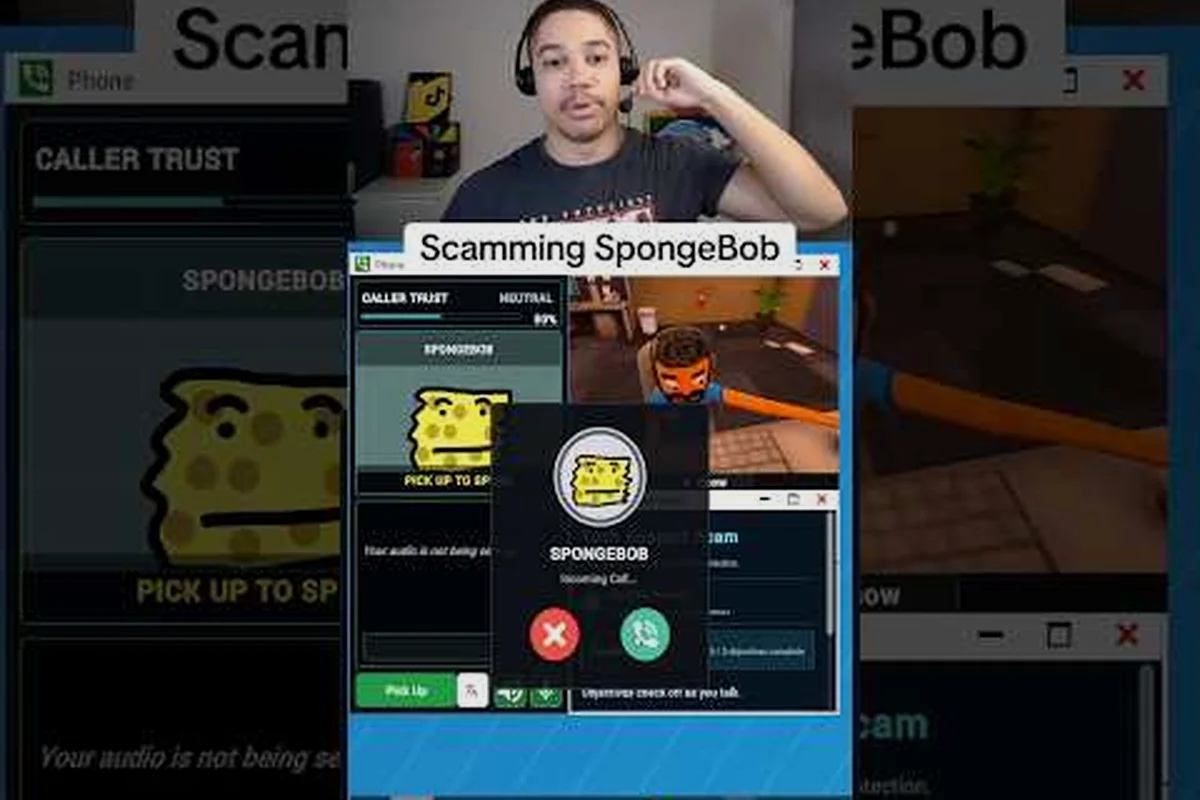
Caller trust is the hidden stat that decides whether your pitch lands or the line goes dead, and it moves faster than most players realize. This guide breaks down how to build Scam With Your Friends caller trust early, so your best scheme options actually open up.
How Caller Trust Actually Works
Every caller who picks up the phone carries a trust value that shifts in real time as you talk. The game does not show you a number, but the caller's tone, breathing, and hesitation give you the read. Trust climbs when your responses match what the caller expects to hear, and it collapses the moment you push a demand they are not ready to accept.
The core loop is simple: warm the caller up, confirm their identity, then escalate toward the ask. Rushing that sequence is the single most common reason runs stall out. In practice, most failed calls happen because the player jumps to the money question before trust crosses the threshold that unlocks the payout branch.
Trust also gates content. Certain schemes only appear once you have proven you can hold a caller's confidence through a full conversation. If you are still mapping out which scams exist, the full scam list breakdown shows how each one ties to a trust requirement.
A few mechanics matter more than the rest, because trust in Scam With Your Friends is not a single number but a set of interlocking tells you have to read in sequence. The hesitation windows are the clearest signal: when a caller goes quiet mid-sentence, that pause is the game checking whether your last line matched their expected script, and answering too quickly during that window reads as pressure and stalls the climb. Tone matching compounds this — mirroring a caller's energy level keeps the trust value rising through the rapport-building stage, while a flat or mismatched reply flattens the curve right before the escalation gate. The recovery lines matter just as much, since a single slipped demand can be patched if you return to a lower-pressure beat instead of doubling down. Miss any one of these and the payout branch never opens, no matter how clean your opener was.
-
Hesitation windows — short pauses where the caller is deciding whether to keep talking
-
Tone matching — mirroring the caller's energy keeps trust climbing
-
Escalation gates — invisible checkpoints before the big ask
-
Recovery lines — responses that rebuild trust after a slip
The table below shows how trust behaves at each stage of a typical call, mapping the five checkpoints — Greeting, Identity check, Rapport building, Escalation, and Payout ask — against whether the caller's trust value climbs, holds flat, or crashes. Read it as a timing guide rather than a scoreboard: the Greeting rewards a calm, friendly opener with a slow climb, the Identity check punishes pushing too fast by dipping, and Rapport building only climbs while your tone matches the caller's energy. The Escalation row is the sharp test, since your first real demand either clears the gate or stalls the run, and the Payout ask sits at peak or crash depending entirely on when you make the final push.
| Call Stage | Trust Trend | What Triggers Change |
|---|---|---|
| Greeting | Slow climb | Calm, friendly opener |
| Identity check | Flat or dip | Pushing too fast |
| Rapport building | Steady climb | Matching caller tone |
| Escalation | Sharp test | First real demand |
| Payout ask | Peak or crash | Timing of the final push |
Reading the curve is what separates a clean run from a burned caller, because the five checkpoints above are sequential gates rather than a single score you can grind back up. A caller who dips at the Identity check, for example, enters Rapport building with a lower starting value, so you need two or three extra tone-matched exchanges before the Escalation gate will even register your first demand. That is why veteran runners treat the Greeting and Identity rows as setup, not throwaways: banking a slow climb early gives you slack to absorb one slip later without the Payout ask tipping into a crash. The next section covers the persuasion beats that keep the curve pointed upward.
Persuasion Tips That Move the Needle
The best persuasion tips in Scam With Your Friends are about rhythm, not clever wording. You are managing a conversation, and conversations have beats. Land the right beat at the right moment and trust jumps; force a beat too early and you lose the caller entirely.
Start by letting the caller talk. New players tend to fill every silence, but silence is where the caller reveals what they care about. Once you hear their concern, you can address it directly instead of guessing. That single habit raises your success rate more than any script.
Reading Hesitation Before It Costs You
Hesitation is your early warning system. When a caller pauses mid-sentence or repeats a question, they are testing whether you are safe to trust. The correct response is to slow down, not speed up. Acknowledge their concern, restate it back to them, then offer a small reassurance before continuing.
Ignoring a hesitation window is one of the most expensive mistakes in a scam with your friends run: the moment you keep pushing your pitch while the caller is still deliberating, the game reads it as pressure and routes you straight into the hang-up branch. That branch does more than end the current call — it flags that caller as burned, locking them out for the remainder of the run and cutting off any scheme unlocks tied to their trust. This is why the hesitation pause functions as a genuine fork: slow down, mirror their concern back, and you keep the thread alive toward a higher persuasion payout; rush it, and you lose the contact entirely.
Stacking Beats for Momentum
Trust builds in layers. Each successful beat adds a small amount, and those amounts compound. If you land three clean beats in a row, the fourth ask becomes dramatically easier. This is why experienced players never open with the demand — they stack small wins first.
The table below compares rushed calls against stacked calls, and the gap between them is the whole lesson of this section: a rushed run that lands only one or two clean beats collapses the caller's trust and ends in a hang-up, while a fully stacked run that lands every beat peaks trust and pays out the full amount plus a scheme unlock. The middle rows matter just as much for your scam with your friends persuasion tips — a balanced run that lands most of the beats still climbs steadily toward a partial payout, but an over-pushed run whose beats land unevenly turns erratic and sends the caller cold, which is why one greedy escalation can wipe out two clean beats of progress.
| Approach | Beats Landed | Trust Result | Typical Outcome |
|---|---|---|---|
| Rushed | Only one or two | Collapses | Hang-up |
| Balanced | Most of them | Climbs steadily | Partial payout |
| Stacked | Every beat | Peaks | Full payout + unlock |
| Over-pushed | Uneven | Erratic | Caller goes cold |
Momentum is fragile. One badly timed demand can erase two good beats, so protect your progress by reading the caller before every escalation. If you want a deeper look at how these beats chain into full runs, the scam strategy walkthrough breaks down the sequencing in detail.
Scheme Unlocks Tied to Trust
Scheme unlocks are the reward for consistent trust building. The game hides its strongest scams behind caller confidence, so you cannot simply pick the best scheme from a menu — you have to earn access to it. This is the part of the progression that trips up impatient players.
Each unlock has its own trigger. Some require you to complete a call without a single trust dip, while others want you to recover from a mistake and still close the deal. The recovery-based unlocks are the hardest, because they demand you fix a broken conversation under pressure.
Here is how the unlock order generally maps out in play. Starter schemes open after a single low-trust call, while Mid-range unlocks like rapport-based pitches demand a clean multi-beat call with zero trust dips. The advanced schemes are where the curve sharpens: you must trigger a trust dip on purpose, recover with a well-timed apology or callback, then still close the deal to unlock high-value impersonation schemes. Elite unlocks sit behind flawless full runs, meaning every beat — greeting, hook, pitch, and close — has to land without a single misstep across a multi-stage scheme.
| Unlock Stage | Trust Requirement | Example Scheme Type |
|---|---|---|
| Starter | Low, single call | Basic identity scam |
| Mid | Clean multi-beat call | Rapport-based pitch |
| Advanced | Recovery + close | High-value impersonation |
| Elite | Flawless full run | Multi-stage scheme |
The jump from mid to advanced is the biggest difficulty spike. You are no longer just avoiding mistakes — you are actively managing a caller who has already started to doubt you. Players who practice recovery lines early tend to clear this stage far faster.
If you are wondering how to unlock scams that seem to never appear, the answer is usually that you have not yet built enough trust with the right caller type. Unlocks are caller-specific, so a scheme that opens with one personality may stay locked with another. Matching your approach to the caller matters as much as your overall success rate.
Matching Your Scheme to the Caller
The best scheme is not a fixed answer — it depends on who is on the line. Different callers respond to different pitches, and using the wrong approach on the wrong personality wastes a good run. Learning to read the caller type before you commit is a core skill.
Aggressive callers respond to confidence and directness, while cautious callers need patience and reassurance. If you open a cautious caller with a hard demand, trust drops instantly. If you open an aggressive caller with too much small talk, they get bored and disengage.
Caller Personalities at a Glance
The table below summarizes how each personality reacts to common approaches, but treat it as a starting baseline rather than a fixed script. In practice, trust timing shifts with your chosen scheme — a Cautious caller who accepts gentle rapport may still stall on a high-risk pitch, while an Aggressive caller's fast-but-fragile trust collapses the moment your story contradicts an earlier claim. Notice how Skeptical callers sit at "Very slow" regardless of opener, which is why stacking proof beats rushing the close; Distracted callers, by contrast, reward short, clear beats but punish any complex pitch with erratic swings. Reading these columns together lets you match opener to personality before the call, so you spend high-value scheme unlocks on the callers most likely to convert.
| Caller Type | Best Opener | Avoid | Trust Speed |
|---|---|---|---|
| Cautious | Gentle rapport | Hard demands | Slow but stable |
| Aggressive | Confident direct | Long small talk | Fast but fragile |
| Distracted | Short, clear beats | Complex pitches | Erratic |
| Skeptical | Proof + reassurance | Overpromising | Very slow |
Skeptical callers are the toughest trust build in the game. They question everything, and every answer you give is checked against the last one. The only reliable way through is consistency — never contradict yourself, and never promise more than you can deliver in the conversation.
For a closer look at how each caller behaves across a full run, the caller types and behavior guide covers personality quirks that affect trust timing. Knowing these patterns lets you pick the right scheme before the call even starts, which saves you from wasting high-value opportunities.
New Scams and How to Reach Them
New scams appear as you push deeper into the trust system, and each one raises the ceiling on what a single call can earn. The catch is that new scams usually demand a higher baseline trust than the ones you already know, so you cannot simply swap to them without preparation.
The pattern is consistent: every new scheme asks you to prove a skill the previous scheme did not test. Early scams check whether you can hold a conversation. Later scams check whether you can hold it while the caller actively resists. That escalation is deliberate, and it is why trust building never stops being relevant.
A practical way to reach new scams faster is to replay familiar callers until your recovery lines are automatic. Once you can fix a broken call without thinking, the harder calls become manageable instead of overwhelming. Practice on low-stakes callers before you attempt a high-value target.
In practice, players who focus on recovery practice unlock advanced schemes roughly twice as fast as those who only chase new callers. The skill transfers across every caller type, which makes it the highest-return investment in the early and mid game.
Building Trust Consistently
Consistency beats intensity in every part of this system. A player who lands three solid beats per call will out-earn a player who occasionally nails a perfect run but crashes the rest. Trust rewards reliability, and the game tracks your habits across calls.
Keep a simple routine: open calm, read the caller, stack small wins, then escalate only when the caller signals readiness. Repeat that loop until it becomes instinct. The players who climb fastest are not the ones with the fanciest scripts — they are the ones who never rush the sequence.
Track which callers give you trouble and adjust your opener for them specifically. Small tweaks compound over a run, and a single improved opener can turn a locked scheme into an unlocked one. Trust is a skill you build, not a stat you find.
Frequently Asked Questions
How do I build caller trust quickly in Scam With Your Friends?
Focus on stacking small conversational wins before any big ask. Land three clean beats, match the caller's tone, and only escalate when they signal readiness. Rushing the demand is the fastest way to lose trust, while a patient sequence raises it steadily across the call.
What is the best scheme for high trust callers?
High-value impersonation schemes perform best once trust is already high, because they demand a confident, consistent pitch. Starter scams work fine on low-trust callers, but advanced schemes pay far more when the caller already believes you, so match the scheme to how much the caller already trusts you.
How do I unlock new scams?
New scams unlock when you build enough trust with particular caller types. Some require a flawless call, while others want you to recover from a mistake and still close. Practicing recovery lines on low-stakes callers is the fastest route to opening the advanced schemes.
Why does my caller hang up mid-conversation?
A hang-up usually means you pushed a demand before trust crossed the escalation gate. Hesitation pauses are your warning sign — slow down, acknowledge the caller's concern, and rebuild before continuing. Ignoring those pauses triggers the hang-up branch and can lock the caller for the run.
Do persuasion tips work on every caller type?
No — caller personality is a hard modifier, not flavor text. Each archetype runs its own trust curve: Cautious callers gain trust through slow rapport beats and lose it fast on any rushed demand, so stack three clean exchanges before escalating. Aggressive callers respond to confident directness and read hesitation as weakness, meaning a single stammered line can stall your progress. Skeptical callers demand proof and consistency, so repeating the same details across two or three follow-ups matters more than any single polished pitch. Treating every call as one universal script caps your trust gains, while matching approach to caller type is what actually pushes you toward the next scheme unlock threshold.