
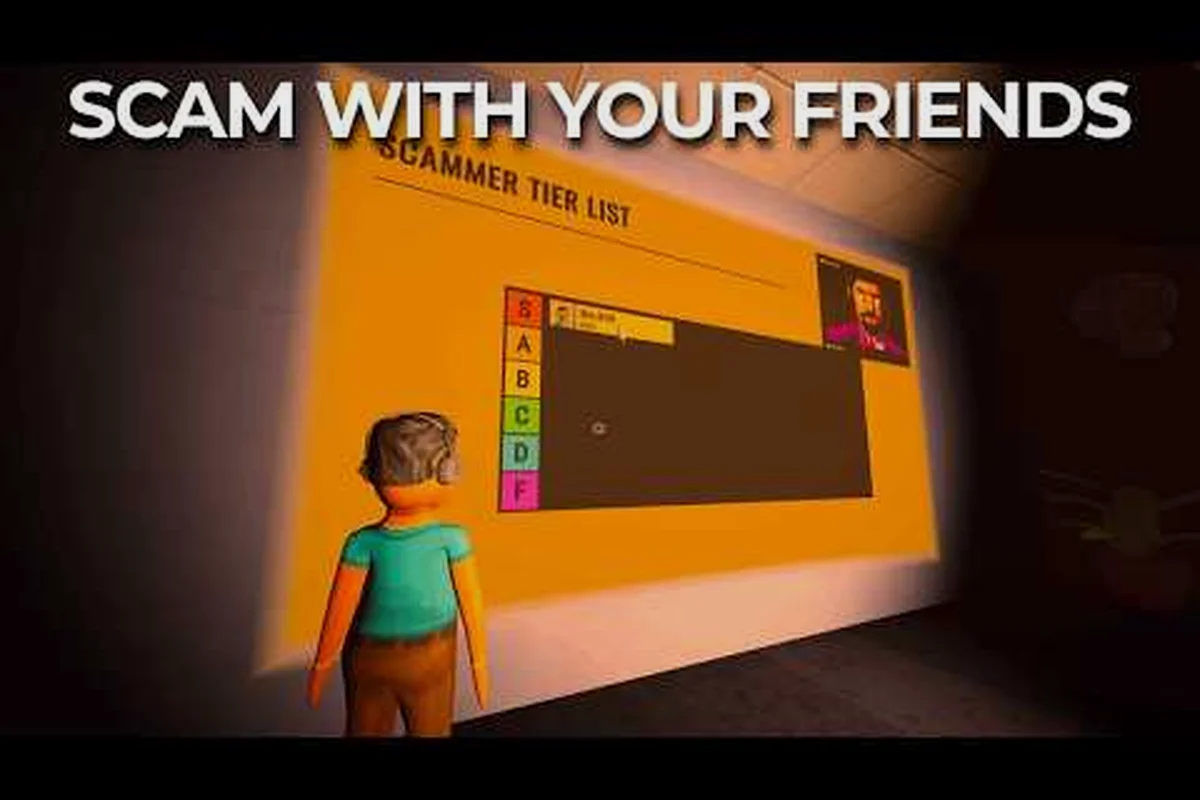
A complete Scam With Your Friends walkthrough matters because the game drops you at a desk with a ringing phone and almost no hand-holding. This guide takes you from the opening tutorial to your first real payout, covering every control and hotkey along the way.
What the Opening Desk Sequence Teaches You
The first thing the game does is sit you at a cluttered desk and hand you a ringing phone. That opening sequence is the closest thing to a structured Scam With Your Friends tutorial, and it exists to teach three things: how to answer, how to talk, and how to survive a caller who starts asking uncomfortable questions. Skip or rush it and you will fumble your first live call.
Here is what the tutorial sequence actually walks you through, in order: it runs roughly ten minutes and chains five checkpoints — the phone pickup, the scripted response panel, free-text typing, the hang-up decision, and the end-of-shift payout summary — each gated behind the previous one, so you cannot reach the caller-suspicion mechanic until you have cleared the typing prompt. In practice, you get less time to answer on the third scripted choice than on the first two, which is why players who mash number keys during the tutorial later misread the clock on live calls.
-
Answering the phone — a single keypress picks up the line, and the game pauses briefly so you can read the caller's opening line.
-
Reading the script — a prompt panel shows suggested responses, and you choose one with the number keys or the mouse.
-
Typing custom replies — free-text entry lets you improvise when the scripted options do not fit the conversation.
-
Ending the call — hanging up early or late both have consequences, and the tutorial shows you the difference.
-
Checking your payout — the end-of-shift summary tallies what you earned and what you lost.
The tutorial is short, maybe ten minutes, but it front-loads the entire control scheme. In practice, players who replay the tutorial after a few shifts tend to notice details they missed the first time, especially around the reply window. If you want a deeper breakdown of the opening hours, the beginner guide expands on what to prioritize once the training wheels come off.
One detail worth flagging: the tutorial does not explain the reply window clearly. A small bar drains while the caller waits for your answer, and letting it empty makes the caller suspicious. You will feel that pressure immediately on your first live call, which is exactly the point.
Scam With Your Friends Controls: Every Key You Need at the Desk
Getting comfortable with the Scam With Your Friends controls is the single biggest factor in whether your first shift feels chaotic or manageable. The layout is intentionally simple, but the game rarely pauses to remind you which key does what once you are live.
The table below covers the core bindings most players rely on during a shift. The four scripted-reply keys (1–4) map left to right onto the on-screen dialogue options, so you can answer a caller without ever moving your hand off the number row. Note that T only opens free-text input once a call is active — pressing it between calls does nothing, a common early-shift mistake. Exact defaults can vary by platform and version, so treat this as a starting reference and confirm the bindings in your own settings menu before your first shift.
| Action | Default Key | When You Use It |
|---|---|---|
| Answer / hang up phone | E | Start and end every call |
| Select scripted response | 1–4 | Fast replies under time pressure |
| Open free-text input | T | Improvise when scripts fail |
| Send typed message | Enter | Confirm a custom reply |
| Open the script binder | Tab | Look up approved lines mid-call |
| Toggle notes / notepad | N | Track caller details |
| Pause menu | Esc | Adjust settings or quit |
Two of these matter far more than the rest. The script binder on Tab is your safety net, because it lets you pull an approved line without memorizing every prompt. The free-text input on T is where experienced players separate themselves, since a well-typed reply can rescue a call that scripted options would have tanked.
If you are weighing whether to play with a controller, the mouse and keyboard overview compares input methods and explains where gamepad support falls short for fast typing. Most players stick with keyboard simply because free-text entry is central to the game.
Why the Reply Window Changes Everything
The reply window is the mechanic that turns a calm script-reading exercise into a tense conversation. Every caller expects an answer within a window, and the window shrinks as the call progresses. Choosing a scripted option is fast; typing a custom reply is slower but often more convincing.
In practice, hesitating on the first prompt is the most common way new players lose a caller's trust. The fix is simple: decide your approach before you answer the phone. If you plan to improvise, have a rough line ready so you are not staring at a blank text box while the bar drains.
Scam With Your Friends Hotkeys That Speed Up a Live Call
Once you know the basics, the Scam With Your Friends hotkeys become a rhythm tool rather than a lookup table. The goal is to keep your hands in one place so your eyes stay on the caller's dialogue instead of hunting for keys.
Here is how a smooth call flows from a hotkey perspective: the sequence is built around four inputs — E to answer, 1–4 for scripted responses, Tab to check the binder, and N to note a detail — and each one maps to a distinct phase of the call rather than being interchangeable. Answering with E opens the dialogue window instantly, so you can start reading the caller's opening line while the response options populate; tapping a number key commits a scripted reply without moving your hand off the home row, which keeps your reaction time under a second. The critical habit is holding Tab before you need it — the binder check pauses your input, so pulling it up mid-sentence rather than after a caller's unexpected question is what separates a clean call from a suspicious one.
-
Press E to answer, then immediately glance at the caller's opening line.
-
Tap 1–4 for the first scripted response if one fits, or press T to type.
-
Hold Tab to check the binder whenever a caller asks something unexpected.
-
Use N to jot a caller detail you will need later in the conversation.
-
Press E again to hang up once the call resolves.
The rhythm matters because the game rewards call flow — a clean sequence of answer, respond, resolve. Breaking that flow with a fumbled keypress or a long pause is what triggers suspicion. Players who internalize the hotkeys report far fewer dropped calls than those who mouse through every menu.
Building Muscle Memory Before Your First Payout
The fastest way to build muscle memory is to run a few practice calls without worrying about the payout. Treat the first shift as a rehearsal: answer every phone, try both scripted and typed replies, and deliberately test what happens when you hang up early. The first day guide covers the specific mistakes that cost new players their opening earnings, which is useful context before you chase a real target.
Keep this hotkey cheat sheet within reach during your first few rehearsal shifts, because the muscle memory you build here carries directly into real payouts. Pressing 1–4 for a standard greeting is the lowest-risk opener since those scripted lines never misfire, but the moment a caller asks something unusual, switch to T rather than forcing a mismatched script that can flag suspicion. Tab pulls the safe answer from your binder when a line slips your mind, N logs caller details so you don't contradict yourself on a later call, and E ends the conversation before a bad read snowballs into a lost payout.
| Situation | Best Hotkey | Why |
|---|---|---|
| Caller opens with a standard greeting | 1–4 | Fastest, lowest risk |
| Caller asks an unusual question | T | Custom reply beats a mismatched script |
| You forgot an approved line | Tab | Binder has the safe answer |
| Caller mentions a detail you must remember | N | Notes prevent contradictions later |
| Call is going badly | E | Ending early limits damage |
The pattern to notice is that scripted keys handle routine moments while typed input handles surprises. New players often over-rely on scripts and then freeze when a caller goes off-script. Consider a concrete rehearsal case: a caller opens with the standard greeting, so you tap 1–4 and stay safe, but then they pivot to a question your binder never anticipated. Forcing a mismatched script here is the exact mistake that flags suspicion, whereas hitting T for a typed reply keeps the conversation believable. Build the habit of reading which situation you're in before your fingers move, so the 1–4 to T transition becomes automatic rather than a panicked scramble.
Reading Callers and Choosing Your Responses
The mechanical controls are only half the walkthrough. The other half is reading the person on the other end of the line and picking a response that keeps them talking. Every caller has a personality, a patience level, and a set of questions they will circle back to.
Broadly, callers fall into a few recognizable types, and your approach should shift accordingly: the rushed caller who taps the desk and wants a one-line answer, the skeptical caller who cross-checks your story against earlier details, the chatty caller who drifts into small talk, and the detail-oriented caller who quotes your own words back at you. Each type punishes a different mistake, so your job is to identify the archetype within the first two exchanges and adjust your pacing, tone, and script length before the caller's trust starts dropping.
-
The rushed caller wants a quick answer and gets impatient with long replies. Match their pace and keep responses short.
-
The skeptical caller questions everything and needs consistent details. Use your notes and never contradict yourself.
-
The chatty caller wanders off-topic and needs gentle steering back to the point.
-
The detail-oriented caller remembers what you said earlier and will catch inconsistencies.
Matching your response style to the caller type is where the game's depth lives. A reply that works on a rushed caller can backfire on a skeptical one, because the skeptical caller reads hesitation as a lie. In practice, consistency across a single call matters more than picking the objectively best line.
When to Improvise Instead of Reading the Script
Scripted responses are safe but predictable, and some callers are written to push past them. When a caller asks something the binder does not cover, improvisation is your only path forward. The trick is to keep custom replies short and consistent with whatever you already told them.
A useful habit is to type your reply in your head before you commit it. If it contradicts an earlier answer, the caller will notice, and the call will spiral. Improvised lines work best when they simply extend the truth you have already established rather than inventing something new.
Managing Your First Shift and Your First Payout
Your first shift is where the tutorial, controls, and hotkeys all collide under real pressure. The clock on each call starts the moment a caller connects, and every prompt you answer pulls from the same small hotkey set — so fumbling a keybind mid-call costs you seconds you can't get back. The payout at the end reflects how many calls you resolved cleanly versus how many you lost to suspicion or hang-ups: a clean resolution pays full value, while a caller who bails early leaves you with nothing and drags your shift total down.
| Shift Stage | Caller Type | Typical Payout Per Clean Call | Risk of Hang-Up | Hotkey Focus |
|---|---|---|---|---|
| Warm-up (calls 1–3) | Low-stakes callers | Base value, rarely escalates | Very low | Drill number keys for scripted responses |
| Mid-shift (calls 4–6) | Mid-value callers | Moderate, scales with caller value | Low–moderate | Lock in dedicated hang-up key timing |
| Push (calls 7+) | High-value callers | Highest single-call payout | High — one mistimed prompt zeroes the call | Full hotkey sequence with the call clock running |
| Any stage | Caller who bails early | $0 (hang-up erases the call) | — | Recover rhythm on next low-stakes caller |
A simple structure for the opening shift keeps things manageable: treat your first two or three calls as a deliberate warm-up on low-stakes callers, since these targets rarely escalate to suspicion and let you drill the hotkey sequence — typically the number keys for scripted responses and a dedicated key to hang up — without risking a high-value payout. Once your call timing rhythm feels automatic, escalate to higher-value callers, where a single mistimed prompt can trigger a hang-up and zero out that call's earnings.
-
Start with low-stakes callers to warm up your hotkey rhythm.
-
Move to higher-value callers once you feel comfortable with the timer.
-
Take a notepad entry on every caller who mentions a detail you might need again.
-
End calls cleanly rather than dragging them out for a marginal gain.
-
Review the end-of-shift summary to see which calls cost you money.
The summary screen is more useful than it looks. It shows where you lost callers, which usually points to a specific weak spot — hesitating on the first prompt, contradicting an earlier answer, or hanging up too early. Fixing that one weak spot typically doubles your next shift's payout.
If you want the full strategic picture of how calls chain together across a shift, the gameplay guide breaks down the broader loop and how each resolved call feeds the next. The key detail that page makes explicit is that payout scales with caller value, not call count — so three clean high-value callers can out-earn a dozen rushed low-stakes ones. That reframes your warm-up: use the first calls to lock in the hotkey rhythm, then bank the shift on the targets that actually move your total, since a single hang-up on a big caller erases the margin several small ones just built.
Common First-Shift Mistakes to Avoid
New players tend to make the same handful of errors, and most of them trace back to rushing. Answering before reading the caller's opening line, typing a long reply while the timer drains, and forgetting a detail you mentioned two prompts ago are the big three. Each one is avoidable with a calmer rhythm.
The other frequent mistake is treating the payout as the goal of the first shift. It is not. The first shift is where you build the habits that carry every later shift, so prioritizing clean calls over maximum earnings pays off quickly.
Frequently Asked Questions
What does the Scam With Your Friends tutorial actually teach?
The opening tutorial teaches the three core actions: answering the phone, choosing or typing a response, and ending the call. It also introduces the reply window and the end-of-shift payout summary. It runs about ten minutes and front-loads the entire control scheme, so replaying it later often reveals details you missed.
Which hotkeys should I learn first?
Start with E for answering and hanging up, 1–4 for scripted responses, and T for free-text input. Those three cover most of a live call. Once they feel automatic, add Tab for the script binder and N for notes, which help when a caller asks something unexpected.
Why do I keep losing callers on my first shift?
The most common cause is hesitating on the first prompt while the reply window drains. Deciding your approach before answering the phone fixes most of these losses. Contradicting an earlier answer and hanging up too early are the other frequent culprits, both avoidable with a steady rhythm.
Can I play without a keyboard?
Controller support exists, but free-text entry is central to the game, and typing on a gamepad is slow enough to cost you calls. Most players stick with a keyboard for that reason. If you do use a controller, lean on scripted responses and the binder rather than improvising.
How long before I earn a real payout?
Most players resolve a handful of calls cleanly within their first shift and see a modest payout on the summary screen. Consistent earnings come once you stop losing callers to the timer. Fixing your single biggest weak spot usually doubles the next shift's total.
The path from the opening tutorial to a real payout is shorter than it looks. Learn the controls, drill the hotkeys until they are automatic, read each caller before you respond, and treat the first shift as practice rather than a payday. Do that, and the payout takes care of itself.